Moonlight Peaks gibt dir keine Minikarte und keine Questmarkierung und scheucht dich mit. Es entführt Sie in eine mondhelle Welt und ermöglicht es Ihnen, sie beim Gehen kennenzulernen – was bezaubernd ist und in den ersten Nächten manchmal ein wenig verwirrend ist. In diesem Leitfaden erfahren Sie, welche Orte Sie besuchen, wie sich das Spiel fortbewegt und wie Sie den langen Fußmarsch überspringen können.
So funktioniert die Karte: feste Kamera, keine Minikarte
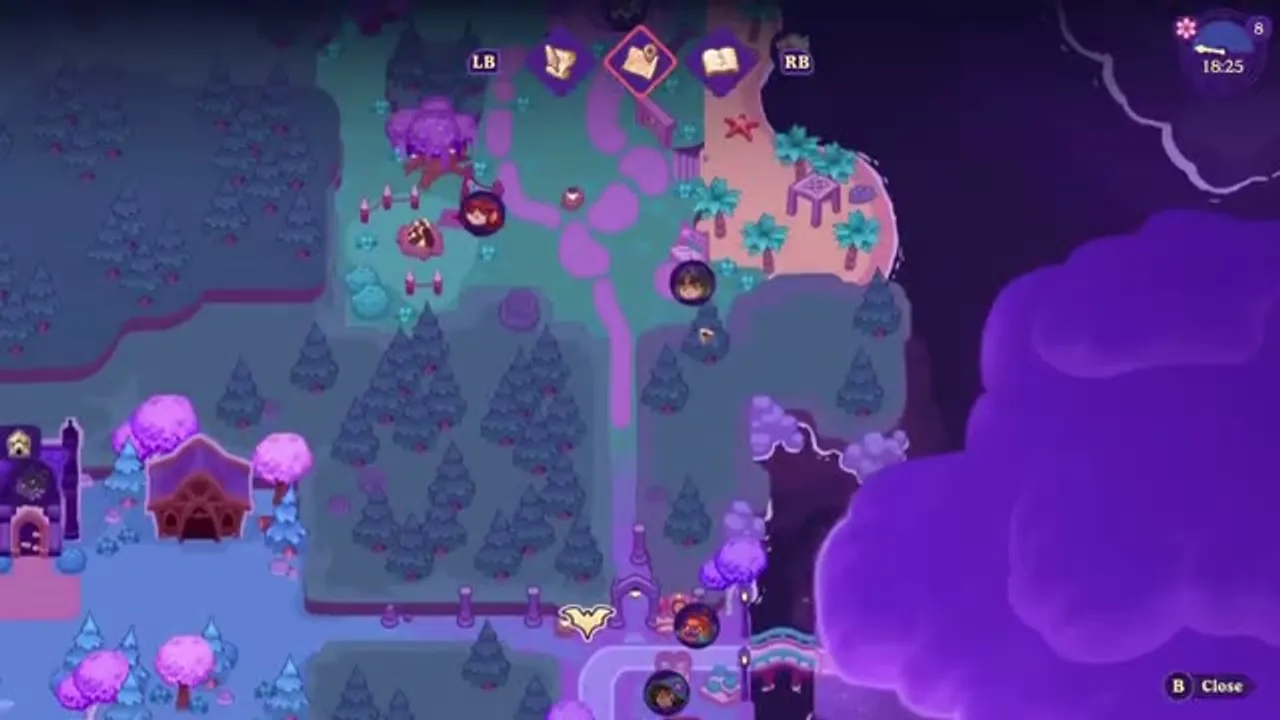
Zwei Dinge, um Erwartungen zu wecken. Erstens ist die Kamera behoben — Moonlight Peaks ist eine Top-Down-Simulation und Sie können die Ansicht nicht drehen oder frei schwenken; Sie lesen die Welt aus einem einheitlichen Blickwinkel, wodurch die handgezeichnete, gemütlich-gotische Kunst immer optimal aussieht. Zweitens gibt es keine dauerhafte Minikarte auf dem HUD, während Sie spielen. Du kann Ziehen Sie a vollständiger Kartenbildschirm (siehe oben), um die Regionen und ihre Verbindung zu sehen, aber Sie navigieren von Moment zu Moment anhand von Orientierungspunkten und nicht anhand eines ständigen Hinweises in der Ecke.
In der Praxis bedeutet das, dass es in der ersten Woche teilweise darum geht Erstellung einer mentalen Landkarte: Welcher Weg führt in die Stadt, wo sich der Wald öffnet, wo das Wasser ist. Die Pull-up-Karte gibt Ihnen Orientierung; Durch die feste Kamera und das Fehlen eines HUD-Blips bleibt der Fokus auf der Welt selbst. Es ist eine bewusste Designentscheidung, die dafür sorgt, dass sich der Ort wie ein Wohnort anfühlt und nicht wie ein Level, das man abschließt – und sobald es Klick macht, hört man überhaupt nicht mehr auf die Karte zu schauen.
Die Standorte
Hier ist die Lage des Geländes, wie die Demo es zeigt. Die Vollversion des Spiels eröffnet einen größeren Teil der Stadt und tiefer gelegene Gebiete außerhalb des Vorschaufensters der Demo.
- Ihr Bauernhof / Gehöft – Heimatbasis: Pflanzen, Tiere, Gebäude und alles, was Sie brauchen dekorieren. Der Knotenpunkt, an dem Sie jeden Abend beginnen und enden.
- Die Stadt – wo die Bewohner wohnen und sich die Geschäfte befinden (Yabbis‘ Saatgutladen, Coffee and Coffins und mehr). Das soziale Herzstück des Spiels und wo die meisten Romantik passiert. ⚠️ Die ganze Stadt ist größer als die Demo zeigt.
- Pinelight Forest, der Wald und Deep Forest – der benannte Wald nördlich der Spielerfarm enthält die Kristallhöhle, Fionas Haus und Lunas Farm. Hier angelt Noel auch, geht auf dem Ridge spazieren und Yabbis besucht den Teich. Dahinter liegen die Nahrungsrouten, besondere Blumen und ein dunklerer, wilderer Rand der Welt.
- Das Ambrosia-Gebiet – ein benannter Bezirk, der mit den Familien und Handlungssträngen der Stadt verbunden ist.
- Die Katakomben – zerstörtes Mauerwerk, Wasser und Kreaturen (hier lauert ein Golem), die in Fledermausgestalt leichter erkundet werden können. Der „Dungeon“-artige Raum des Spiels.
- Strände, Sümpfe und Minen – Wasserkante für Angeln und Nahrungssucheund Minen für Materialien. Ein Startdurchlauf bestätigt, dass die Welt in verschiedene Bereiche unterteilt ist – a Strand, ein Wald, ein Sumpf und mehr – groß für das Genre, aber „ohne Platzverschwendung“, sodass Sie es ziemlich schnell durchqueren können.
- Das Museum – eine spätere Freischaltung. Ein 60-stündiges Durchspielen ermöglichte erst etwa 60 Minuten Zugriff 20 Stunden in, was ungewöhnlich spät ist; Es ist ein Grund, an der Neuheit ihrer Art festzuhalten Lebewesen und Fundstücke anstatt sie zu verkaufen.
- Geheime Händlerläden – versteckte Geschäfte, die von geführt werden magische Händler über die Sie beim Erkunden stolpern, zusätzlich zu den wichtigsten Geschäften der Stadt. Eine weitere Belohnung für das Einstecken in Ecken.
Einer von Moonlight Peaks‘ Gewollte Rhythmen zeigen, wie langsam das alles enthüllt wird: Rezensenten bemerken, dass sich die Karte Dutzende von Stunden lang öffnet – das Museum bei etwa 20 Stunden, ein Bereich immer noch bei 60 Stunden gesperrt – wenn sich die Welt also früh klein anfühlt, dann ist das beabsichtigt.
Behandeln Sie dies als die Form der Welt und nicht als den endgültigen Atlas. Gebietsnamen und Verbindungen werden bei Vorschauen und Durchspielen bestätigt; Jede Region öffnet sich, während Sie die Hauptgeschichte vorantreiben und Ihre Werkzeuge verbessern.
Der umgestürzte Baum von Mysterious Bay
Wenn Die geheimnisvolle Bucht sagt Ihnen, einen umgestürzten Baum hochzuheben und nicht die Heulenden Sümpfe zu durchsuchen. Das Log ist drin Mondbeschienene Kiefern, am kleinen Wasserfall westlich der Treppe, die zu Lunas Samenwagen und Hütte führt.
Kaufen Arborascend I von Web of Wonders, behalte 3 Mana verfügbar, und werfen Sie es auf das Protokoll, um die Clearing-Zwischensequenz auszulösen. Die Rune ist ein baumförmiges Muster: unten, oben, rechts, links, oben. Dies ist die Route, die die neu getroffenen Meerjungfrauen wieder mit der Stadt verbindet, es handelt sich also eher um ein Story-Tor als um eine optionale Szenerie.
Schnellreise: der Hexenkreis
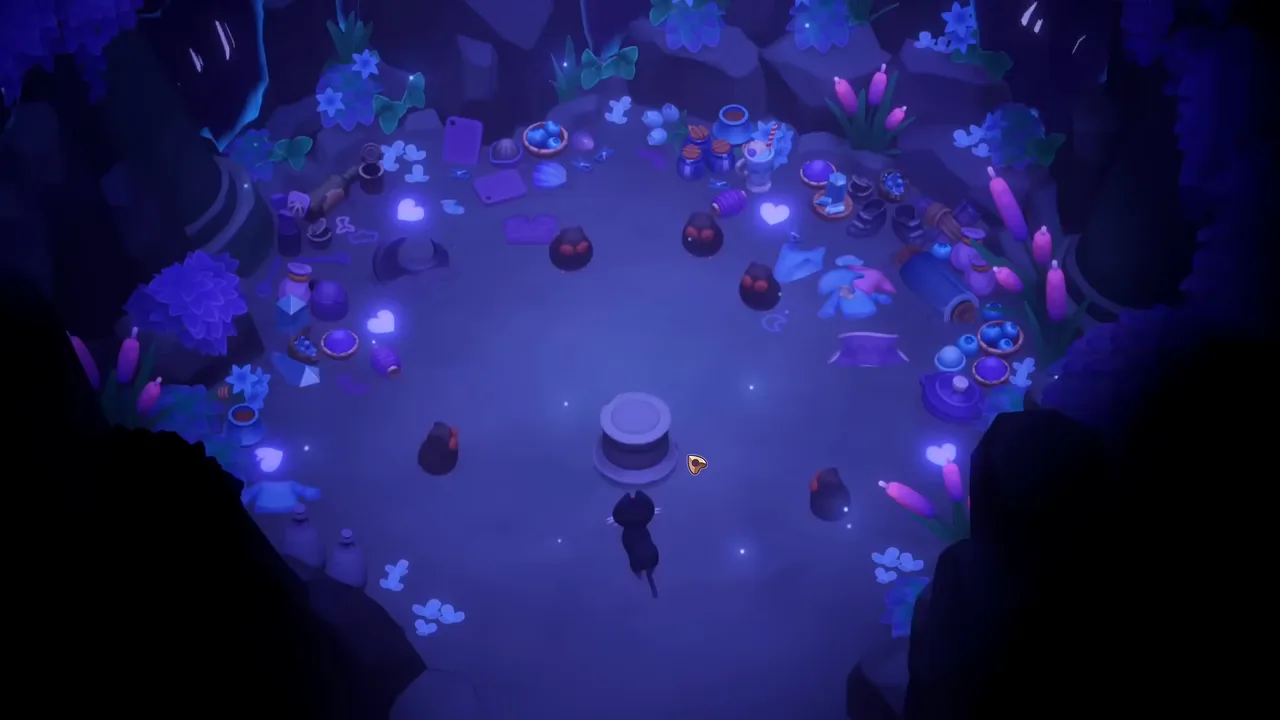
Das große Merkmal der Lebensqualität ist das Hexenkreis – ein Steinkreis, der als teleportieren. Treten Sie hinein und Sie können sich über die Karte bewegen, anstatt Ihre Schritte zu Fuß zurückverfolgen zu müssen. In einem nächtlichen Spiel, in dem jede Nacht ein Wettlauf gegen den Sonnenaufgang ist, ist es wertvoll, auf lange Spaziergänge zu verzichten: Ein Teleport-Netzwerk bedeutet, dass Sie mehr Nacht mit Landwirtschaft, Nahrungssuche und Geselligkeit verbringen und weniger mit der Durchreise verbringen.
Das ist hier wichtiger als in einer typischen Farmsimulation weil Es gibt keine Minikarte und kein Fahrzeug – der Hexenkreis ist die Antwort des Spiels auf eine große, begehbare Welt.
Fledermausform: zu Fuß reisen, schneller
Ihr anderer Bewegungstrick ist Fledermausform, die Gestaltwandlung Fähigkeit, die es Ihnen ermöglicht, schneller herumzusausen als zu Fuß. Es ist die Kurzsprung-Ergänzung zum Fernteleport des Hexenkreises: Fledermausform zum schnellen Durchqueren eines Gebiets, der Kreis zum Durchqueren der gesamten Karte. Fledermausform ist auch die Art und Weise, wie Sie das am bequemsten erkunden können Katakomben und andere engere Räume.
Zusammen bilden sie eine einfache Reiseschleife: Fledermausform für den Alltag, der Hexenkreis für kartenübergreifende Reisen. Erfahren Sie, wohin der Zirkel Sie bringt, und planen Sie Ihre Nächte danach.
Tipps für die Fortbewegung
- Lernen Sie die Routen frühzeitig. Ohne Minikarte dienen die ersten paar Nächte dazu, sich einzuprägen, welcher Weg wohin führt – das zahlt sich schnell aus.
- Fledermausform freischalten und verwenden. Es verkürzt die Gehzeit erheblich und macht die Katakomben weitaus weniger anstrengend.
- Bauen Sie Ihre Nacht rund um den Hexenkreis. Gruppieren Sie Besorgungen nach Gebiet, sodass ein einzelner Teleport die meisten Schritte einspart.
- Keine Angst vor den dunklen Ecken. Die Tiefen des Waldes und die Katakomben bergen Materialien und Kreaturen, die eine Reise wert sind – bringen Sie einen Weg nach Hause.
Informationen zu den Fähigkeiten, die Sie bewegen, finden Sie unter Gestaltwandlung und Fledermausgestalt und die Zauberliste (der Hexenkreis-Teleporter lebt dort auch); für was zu tun ist, wenn Sie ankommen, das Angeln und Nahrungssuche und Landwirtschaft Leitfäden decken den Rest ab.