Kochen Moonlight Peaks ist kein Nebenhobby, das Sie getrost ignorieren können – es ist der Motor, der Ihre Nächte am Laufen hält. In den meisten Farmsimulationen füllt Essen lediglich die Energie auf. Hier erfüllt es eine doppelte Aufgabe: Eine gute Mahlzeit macht regenerierend sowohl deine Ausdauer als auch dein Mana, was die Küche zu einem der wichtigsten Räume im Spiel für jeden macht, der hart Landwirtschaft betreiben möchte und Zauber wirken.
Warum Kochen wichtig ist: Es füllt beide Riegel wieder auf
Ihre Nacht läuft auf zwei Ressourcen. Ausdauer treibt schwingende Werkzeuge an; Mana Befugnisse Zauberwirkung. Beide entleeren sich während der Arbeit, und der sauberste Weg, sie wieder aufzufüllen, ist essen. Rohkost und Fisch geben etwas zurück, aber Gekochte Gerichte sind am effizientesten – eine richtige Mahlzeit bringt einen bedeutenden Teil von beidem zurück.
Dies verändert Ihre Einstellung zum Thema Essen. Verkaufen Sie nicht jede Ernte und jeden Fisch für Münzen; Behalten Sie genug, um sich zu ernähren, denn eine Nacht, die Sie erschöpft und ohne Mana verbringen, ist eine verschwendete Nacht. Wenn ein Spieler früh zur Neige ging und nichts Besonderes vorbereitet hatte, nicht einmal eine schnelle Traubensaft war genug, um sie am Laufen zu halten – aber je besser Ihre Speisekammer gefüllt ist, desto länger und härter können Sie jede Nacht drängen.
Wie Rezepte funktionieren
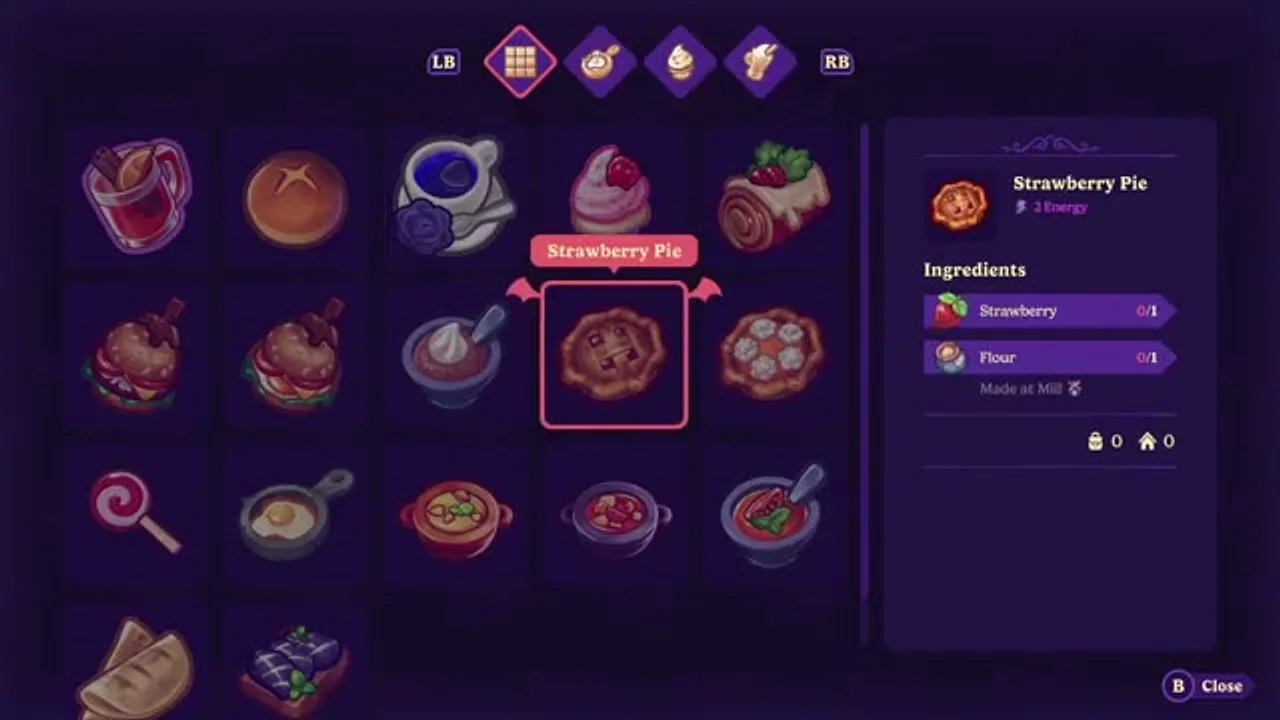
Es folgt das Kochen Rezepte, von denen jedes seine eigenen auflistet Zutaten und die Energie, die es wiederherstellt. Das Rezeptmenü (siehe oben) stellt die Gerichte in Form eines Rasters dar – Kuchen, Suppen, Getränke, frittierte Snacks und mehr – sodass Sie auf einen Blick sehen können, was Sie zubereiten können und was Sie jeweils an Zutaten kosten.
Ein nützliches Detail: Die Gerichte werden im Restaurant zubereitet relevante Station, nicht immer ein einzelner Herd. Die meisten Mahlzeiten werden im Restaurant zubereitet Kochstation, Getränke gären im Fass, und einige Rohstoffe werden woanders verarbeitet — Zucker Auswird beispielsweise gefräst Zuckerknochen am Mühle, und dieser Zucker wird dann in Desserts und Tees verwendet. Ein Teil des Kochens besteht also darin, die Produktionsgebäude auszubauen, die die Rezepte erfordern.
Aber zuerst müssen Sie es tun lernen das Rezept – hier kommen Kochbücher ins Spiel.
Kaffee & Särge: der frühe Rezeptstopp
Die kurze Antwort: Die ersten drei dokumentierten Kochbücher finden Sie unter Kaffee & Särge im Stadtzentrum. Der von der Community verwaltete Startbestand verzeichnet es als geöffnet ab 20:00 bis 01:00 Uhr, also verschieben Sie den Besuch nicht bis zum Ende einer vollen Nacht. Es wird von geführt Mina und Evan, und es ist sowohl ein Café als auch der Ort, an dem man zu Beginn des Spiels überschüssige Münzen in eine echte Rezeptliste umwandeln kann.
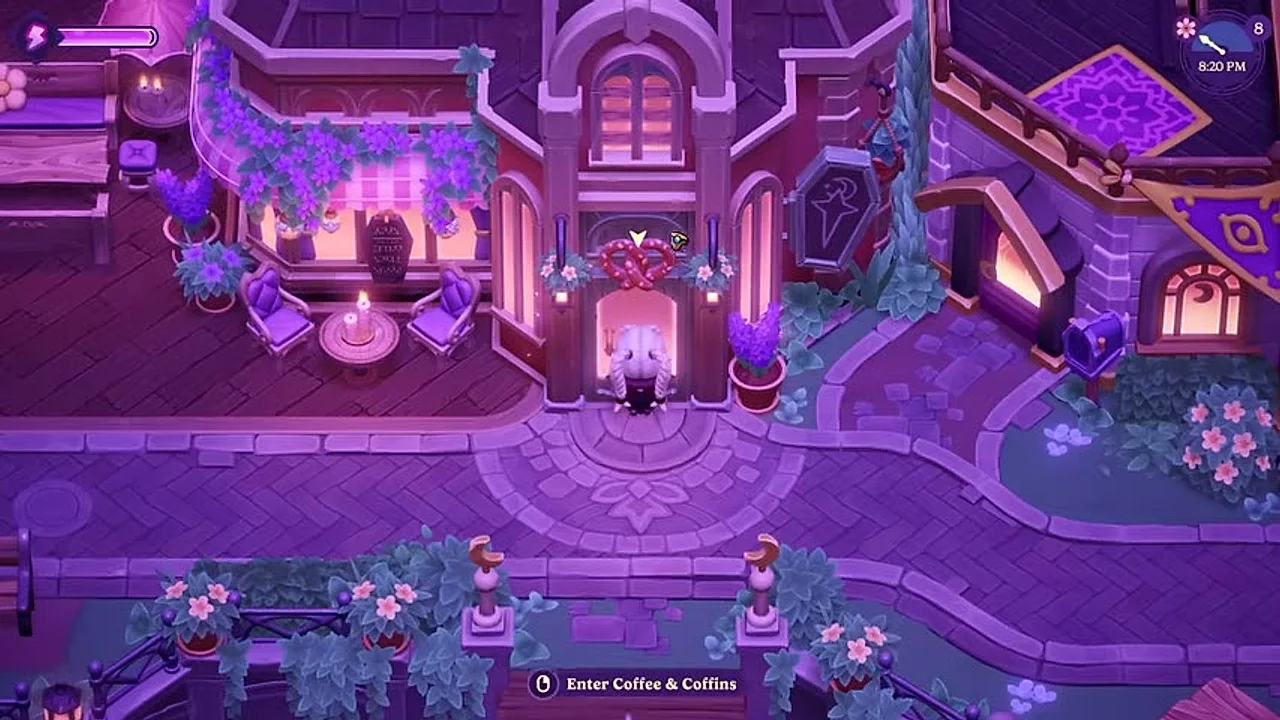
Die aktuelle Community-Liste des Shops umfasst auch Fertiggetränke und Süßigkeiten sowie Möbel, Särge und Küchenpläne. Das macht es zu einer verlockenden Geldverschwendung, aber der redaktionelle Aufruf ist einfach: Kaufen Sie das Starter-Kochbuch vor dekorativen Stücken oder teuren Café-Leckereien. Jede Nacht wird ein Rezeptbuch komplizierter, weil es die Ernte, das Futter und die tierischen Güter, die Sie bereits sammeln, in Ausdauer und Mana umwandelt. Behandeln Sie die Öffnungszeiten, die vollständige Speisekarte und die Aktienkurse als von der Community gemeldete Daten der Startversion; Überprüfen Sie den Live-Shop nach einem Patch, anstatt davon auszugehen, dass sich ein rotierender Lagerbestand nicht ändern kann.
Kochbücher schalten Rezepte frei
Man fängt nicht an, alles zu wissen. Rezepte sind hinter verschlossenen Türen Kochbücher die Sie in der Stadt kaufen und von denen jedes eine thematische Auswahl an Gerichten lehrt:
| Kochbuch | Wo | Preis |
|---|---|---|
| Starter-Kochbuch | Kaffee & Särge | 750 Münzen |
| Sushi-Kochbuch | Kaffee & Särge | 1.500 Münzen |
| Kochen für Vampire | Kaffee & Särge | 2.500 Münzen (von der Community gemeldet) |
| Weitere Kochbücher | Rund um die Stadt | Wird noch dokumentiert |
Ein frühes Ziel bedeutet also einfach, sich das zu leisten Starter-Kochbuch aus dem Café von Mina und Evans – es ist der Schlüssel, der Ihre Speisekammer in echte Mahlzeiten verwandelt. Die sinnvolle Reihenfolge ist: Zuerst die Vorspeise, dann Sushi, wenn die Rezepte zu Ihren Zutaten passen, und dann die 2.500-Münzen Kochen für Vampire Volumen, sobald Ihre Farm zuverlässig Einnahmen erzielt. Weitere Kochbücher können noch katalogisiert werden, wenn die Spieler mit dem Release-Build weiter voranschreiten.
Zutaten sammeln
Die gute Nachricht: Du sammelst bereits Kochzutaten, indem du einfach spielst. Sie kommen aus jedem Teil Ihrer Routine:
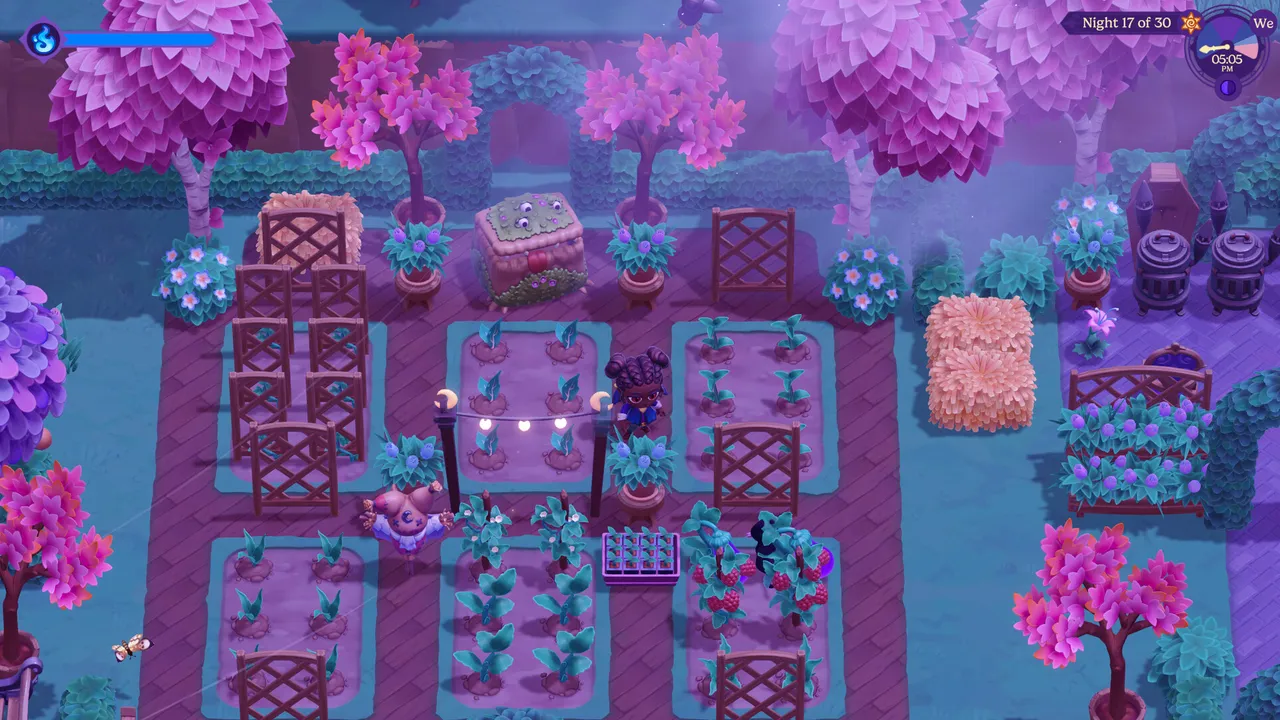
- Pflanzen Sie bauen an – die Grundnahrungsmittel der meisten Rezepte.
- Gesammelte Gegenstände Gefällt mir Lila Lavendel und andere Entdeckungen auf der Welt.
- Fisch Sie fangen am Wasser.
- Tierische Produkte sobald Sie Vieh haben.
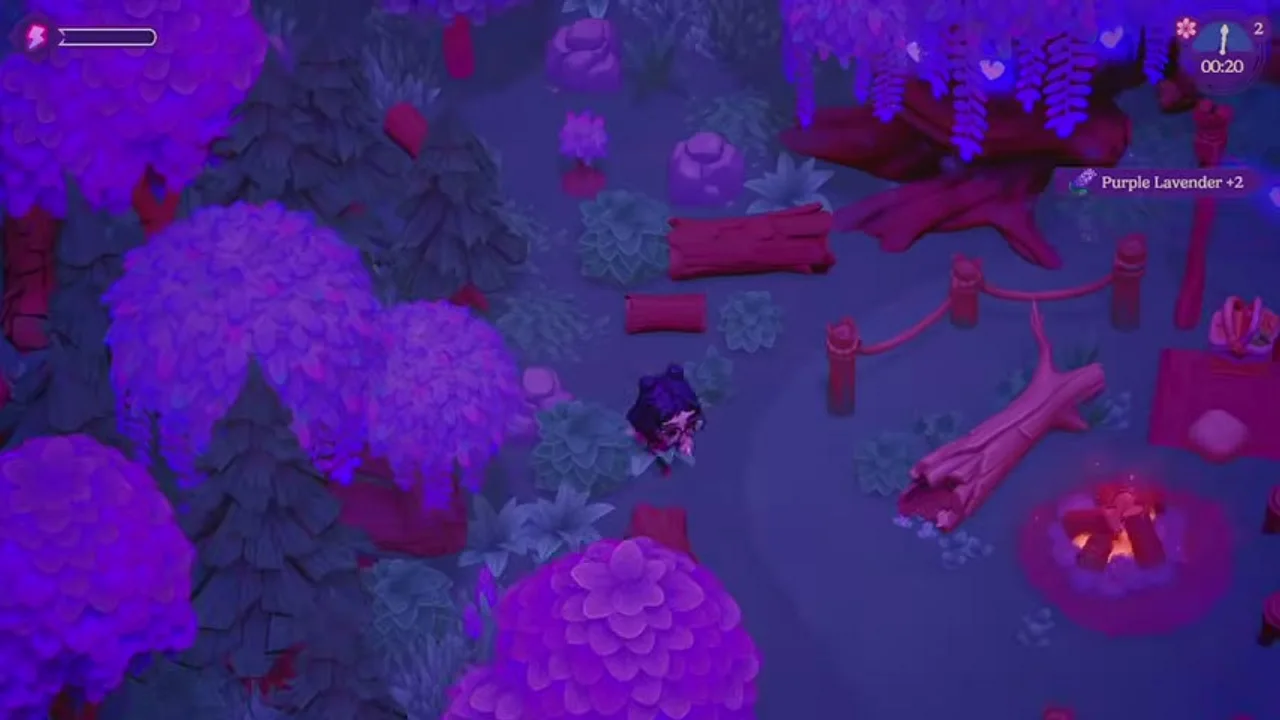
Aus diesem Grund falten Sie einen Kurzschluss Sammelschleife in jede Nacht – sammeln Sie Futter und Fisch, während Sie reisen – und bauen Sie auf natürliche Weise die Speisekammer auf, auf die das Kochen angewiesen ist. Es verstärkt auch die goldene Regel aus dem Geldratgeber: Behalten Sie Ihre ungewöhnlichen Zutaten anstatt alles zu verkaufen, denn Sie werden es haben wollen, sobald es Rezepte gibt.
Bestätigte wissenswerte Rezepte
Hier ist eine Reihe von Rezepten, die jetzt im Startspiel bestätigt wurden, mit ihren genauen Zutaten, der Energie, die sie wiederherstellen, und dem Ort, an dem sie gekocht werden. Das deutlichste Muster springt aus der Energiesäule hervor: Herzhafte, herzhafte Gerichte und Cocktails geben viel mehr Energie zurück als Desserts. Ein Glühwein gibt etwas zurück 70; ein Erdbeer-Cupcake, 2. Kochen Sie also die großen Mahlzeiten tankenund backen Sie die Süßigkeiten dazu Geschenk oder Verkauf.
| Rezept | Wiederherstellungen | Zutaten | Station |
|---|---|---|---|
| Glühwein | 70 ⚡ | 1 Blutorange + 1 Rotwein | Kochstation |
| Gazpacho-Suppe | 50 ⚡ | 2 Bluttomaten + 1 Zwiebel | Kochstation |
| Fischiger Burger | 35 ⚡ | 1 Bluttomate + 1 Orbis + 1 Brot | Kochstation |
| Bauerneintopf | 25 ⚡ | 2 Bluttomaten + 1 Aubergine | Kochstation |
| Violettes Sashimi | 20 ⚡ | 1 Violett | Kochstation |
| Veggie-Burger | 15 ⚡ | 1 Bluttomate + 1 gewöhnlicher Pilz + 1 Brot | Kochstation |
| Puk’s Pizza | 15 ⚡ | 1 Bluttomate + 1 Zwiebel + 1 Mehl + 1 Käse | Kochstation |
| Kürbiseintopf | 15 ⚡ | 1 Gelber Glowglammer + 1 Kürbis | Kochstation |
| Schokoladenkuchen | 4 ⚡ | 1 Mehl + 1 Schokolade | Kochstation |
| Irischer Kaffee | 4 ⚡ | 1 Draculamb-Milch + 1 Mondschein + 1 Kaffeepulver | Kochstation |
| Rouladenkuchen | 3 ⚡ | 1 Erdbeere + 1 Ei + 1 Mehl | Kochstation |
| Kürbiskuchen | 3 ⚡ | 1 Kürbis + 1 Ei + 1 Mehl | Kochstation |
| Erdbeerkuchen | 2 ⚡ | 1 Erdbeere + 1 Mehl | Kochstation |
| Zitronen-Cupcake | 2 ⚡ | 1 Zitrone + 1 Mehl | Kochstation |
| Ollebrod | 2 ⚡ | 1 Brot + 1 Bier | Kochstation |
| Tortilla | 2 ⚡ | 2 Roter Mais | Kochstation |
| Brot | 1 ⚡ | 1 Mehl | Kochstation |
| Spiegelei | 1 ⚡ | 1 Ei | Kochstation |
| Lollipop | 1 ⚡ | 1 Melone + 1 Zucker | Kochstation |
| Schwarzer Rosentee | 0 ⚡ | 1 schwarze Rose + 1 Zucker | Kochstation |
| Zucker Aus | — | 1 Zuckerknochen | Mühle |
Ein paar Anmerkungen: Brot, Käse und Zucker Aus sind Grundzutaten, die Sie ständig herstellen werden – Brot allein ernährt Burger und Ollebrod, Zucker nährt Desserts und Tees. Getränke wie Saft und Wein werden in der erstellt Fass, nicht am Herd – ein schneller Traubensaft ist der bescheidene frühe Lebensretter, während Bluttraubenwein ein Grundstein dafür ist frühe Wirtschaft (Orlocks erste Quest bringt Sie buchstäblich dazu, welche zu erstellen). Und halten Sie Ausschau nach Rezepten, die Geschenkartikel enthalten – Schwarzer Rosentee und Violettes Sashimi beide essen Blumen, die ein Bewohner vielleicht geliebt hätte, also wägen Sie den Kelch gegen die Werbung ab.
Wo Gerichte zubereitet werden
Kochen ist nicht an einen Herd gebunden. Die meisten Gerichte werden hier zubereitet Kochstation, aber unterschiedliche Rezepte führen unterschiedliche Routen durch Stationen – die Fass für Saft und Wein, die Mühle für Zucker (von Sugarbones) und andere Helfer auf dem Bauernhof für Marmelade, Käse und Schokolade. In der Praxis bedeutet dies, dass Ihre Küchenkapazität mit Ihrem Betrieb wächst: Jedes Produktionsgebäude, das Sie hinzufügen (abgedeckt in der Geldratgeber) schaltet mehr von dem frei, was Sie vorbereiten können. Schon früh kochst du einfache Dinge; In der Mitte des Spiels, wenn eine Mühle, Fässer und mehr vorhanden sind, öffnet sich das Rezeptbuch tatsächlich.
Eine einfache Kochroutine
Um das System optimal zu nutzen, ohne darüber nachzudenken:
- Bauen Sie eine zuverlässige Grundnahrungsmittelpflanze an mit dem Sie kochen können – etwas, das Sie in großen Mengen haben.
- Versammeln Sie sich unterwegs – Sammeln Sie auf Ihren Reisen gesammelte Zutaten und Fisch.
- Erstellen Sie die Stationsrezepte, die Sie benötigen – Die Mühle und andere Hersteller schalten Gerichte frei.
- Kochen Sie eine Portion vor einem großen Abend damit du unterwegs Ausdauer und Mana auftanken kannst.
- Nehmen Sie ein paar Snacks mit – selbst einfaches Essen macht eine festgefahrene Nacht wieder zu einer produktiven.
Die vollständige Rezeptliste umfasst weit über hundert Gerichte aus den Bereichen Lebensmittel, Suppen, Sushi, Marmeladen, Desserts und Getränke – die wiki.gg Kochseite katalogisiert jeden einzelnen – aber das Prinzip ist festgeschrieben: Kochen ist die Art und Weise, wie man die langen, langsam brennenden Nächte übersteht Moonlight Peaks ist rundherum aufgebaut.
Informationen zur wiederaufgefüllten Ressource finden Sie unter Zauber und Mana; für die Pflanzen und Futtermittel, die Ihre Rezepte ernähren, die Landwirtschaft und Angeln und Nahrungssuche Leitfäden sind für Sie da.